
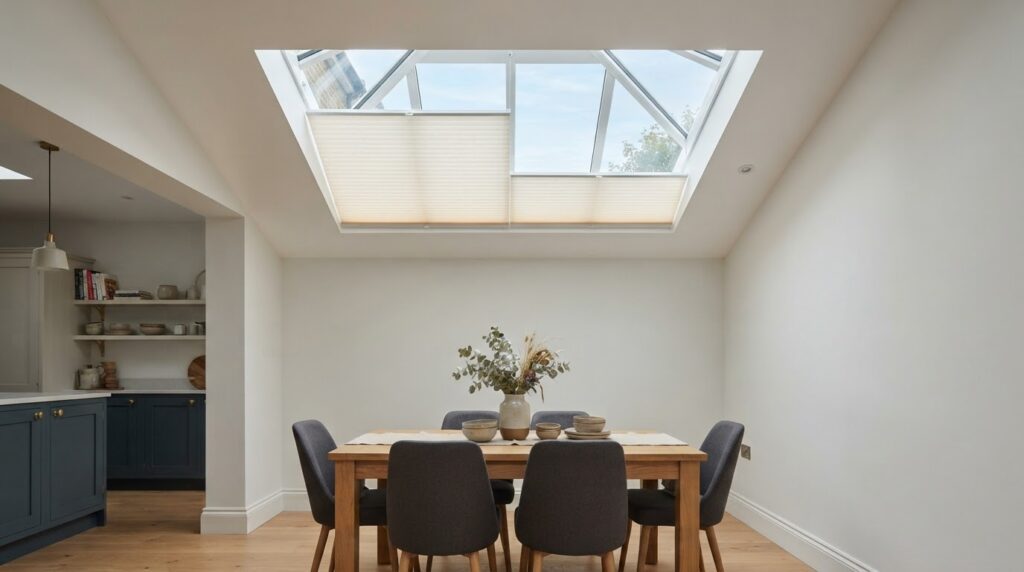
A roof lantern can bring daylight into the middle of a Warrington extension, where light from the back doors may struggle to reach. On a bright afternoon, that same overhead light can reflect off a dining table, make a laptop hard to read or leave one end of the room uncomfortable. The right roof lantern blind depends on how you use the room, how much daylight you want to keep and how easily you can reach the opening.
Start with the problem you want to solve
Spend a bright day noting when the light becomes a nuisance and where it lands. If the sun hits the dining table for an hour or two, a light-filtering fabric may take the edge off the glare while keeping the room bright. If you regularly use a projector or watch television nearby during the day, ask to see a more opaque fabric and check where light might still come in around the edges.
If the room feels too warm in sunshine, ask about solar-reflective fabrics and how the proposed blind sits in relation to the glazing. A blind inside the room can improve comfort by shading the area below it. The effect on room temperature depends on the glazing, ventilation and how much sun also comes through the doors and other windows.
Decide where the blind should sit
For a pitched roof lantern, a blind can often run horizontally across the rectangular opening at its base. This keeps the blind at ceiling level and leaves the shape of the lantern visible when the fabric is drawn back. Ask how much of the opening the folded fabric and rails will occupy when fully open. That matters if you chose the lantern to bring as much daylight as possible into a deep room.
Pleated systems are worth considering for this layout. Ask how the fabric is supported across the span and whether one blind or two sections would suit the opening. Two sections can give you more control over which end of the room is shaded, depending on the layout, and may introduce a visible join. If the lantern has an opening vent, check access to its controls and whether anything projects into the proposed path of the blind.
Plan the controls and power before fitting
For a high or awkward opening, a motorised blind lets you adjust the shade from floor level. Ask where the motor and power supply will sit and how you would reach them for servicing. If you are considering a rechargeable option, find out where the charging point is and how you would connect it. For a mains-powered system in an extension still being built, discuss cable routes with your installer and electrician before the ceiling is finished.
Think about who uses the room and how often the blind will move. A wall control in a fixed spot can be handy in a busy kitchen-diner. If you want the blind to close at a set time, check what timer or smart-home controls the specific motor supports.
What to have ready for a measuring appointment
Take a photo from floor level showing the whole opening, along with any vents, lights or beams close to it. Note when the glare is worst and where you usually sit. If building work is ongoing, say when the plastering or tiling will be complete so the measuring visit can be timed around the finished opening. Ask to view fabric samples held up towards the lantern, where the light behind them will give you a better idea of how they will look in use.
To discuss roof lantern blind options for your home, book a measuring appointment with Deva Blinds Warrington and select Roof Lantern on the form.